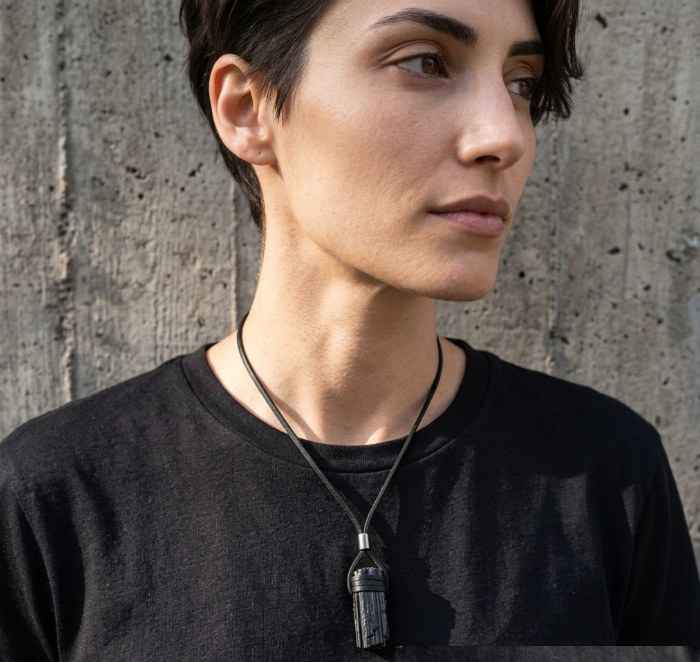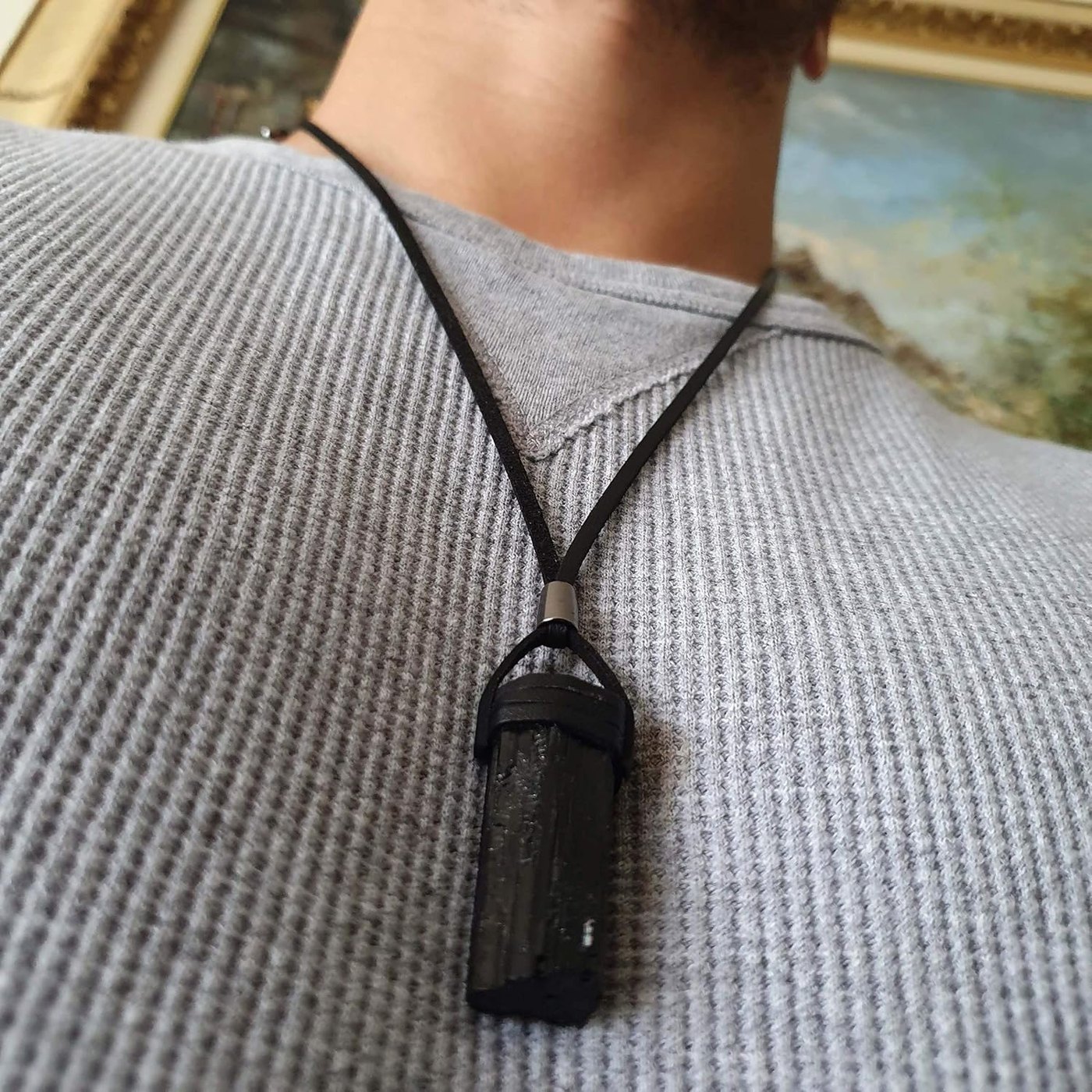
Every crystal is a different piece of the earth. Yours will not look exactly like this one, and that's the point.
Raw black tourmaline · leather wrap · adjustable cord
Some people drain you. Wear something that doesn't.
A raw, uncut crystal of black tourmaline, the protection stone, exactly as it left the earth. Worn low on the chest.
$49$98Founders' pricing, first 100 pieces
- StoneNatural black tourmaline, raw and untreated, 1.5–2 in
- WrapGenuine leather, wrapped by hand, no glue
- CordBlack cord, adjusts 18–28 in, no clasp
- WeightAbout 1 oz
Free US shipping on the pair and up. Ships within 2 business days, tracked and insured.
30 daysWear it, return it if it's not for you
Real stoneRaw tourmaline, never dyed or resin
From FloridaPacked and shipped by us, not a warehouse